Evaluating a CRM migration is a high-stakes decision for manufacturing sales and marketing leaders. Before you move away from HubSpot, it’s essential to understand the true impact of such a transition—beyond the technical checklist.
Ease of Use: Understanding the User Experience Shift
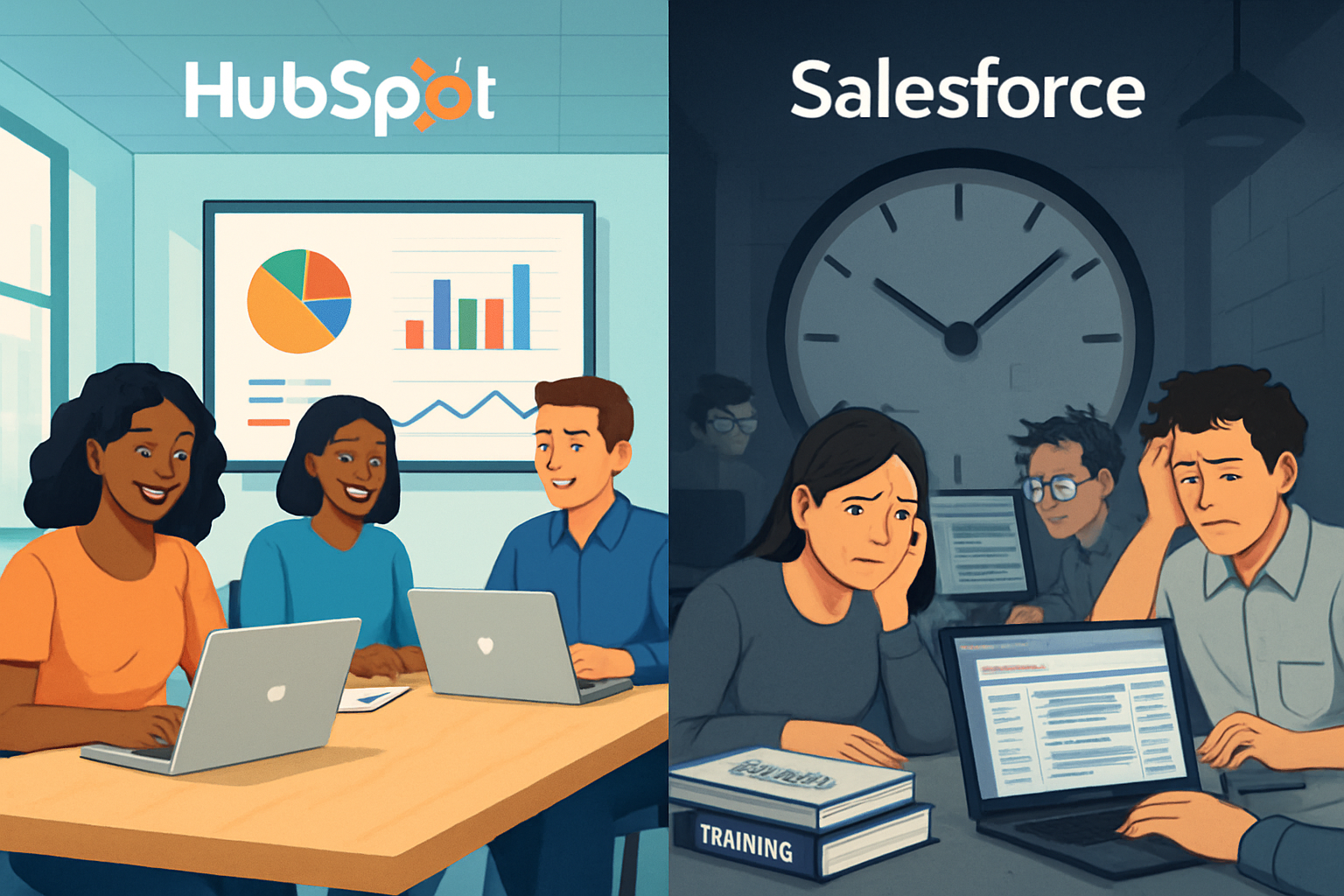
HubSpot is recognized for its intuitive, user-focused experience. Manufacturing teams quickly adapt to workflows, reducing ramp-up times and allowing staff to focus on high-value activities instead of wrestling with software. Both sales and marketing professionals can deploy campaigns, launch automations, and manage leads without waiting for IT approvals or technical support. This autonomy accelerates productivity and drives measurable outcomes.
Replacing HubSpot with a complex CRM like Salesforce introduces a significant learning curve. New reps face longer onboarding, and even experienced team members may need dedicated training or admin support for routine tasks. Every adjustment or update often involves specialized knowledge or resources. Manufacturers that rely on agility and fast time-to-market will feel these delays directly—potentially missing out on sales opportunities or being slow to respond to customer demand.
Cost Considerations: Direct and Hidden Expenses
A move to Salesforce isn’t just about switching software—it’s about rethinking your budget. HubSpot offers predictable costs, a free entry tier, and an all-in-one pricing structure ideal for SMB and mid-market manufacturers. Migrating to Salesforce, however, means accounting for multiple user licenses, additional charges for strategic marketing features, third-party tool integrations, and ongoing technical consulting. Implementation can drag on, inflating costs before ROI materializes. Without a clear cost/benefit analysis, manufacturers may find themselves overspending for capabilities that don’t directly address their operational needs.
Marketing Independence: Flexibility at Risk
HubSpot empowers marketing teams to act independently—testing ideas, iterating on messaging, and refining user experience at the speed of the market. Marketers can spin up new landing pages, automate engagement, and personalize communications with minimal friction.
If you switch from HubSpot to a more restrictive platform, simple adjustments often require IT or admin intervention. This slows down experimentation and reduces innovation capacity—two crucial drivers for growth in the manufacturing sector. Consider how loss of marketing agility could ripple through your lead generation and brand positioning strategies.
Migration Risks and Operational Disruption
Migrating away from HubSpot is complex. It’s not just exporting contacts—it’s rebuilding your entire marketing and sales infrastructure, including custom workflows, forms, templates, blogs, and analytics. Many companies underestimate the man-hours involved in recreating finely tuned processes. Information can be lost, integrations may break, and historical performance data may become inaccessible. Even with expert partners, the risk of workflow disruption and productivity loss remains high.
All-in-One Platform: Integration and Efficiency Advantages
HubSpot consolidates CRM, marketing automation, email, landing pages, blogging, live chat, and reporting into a unified system. This simplifies vendor management, ensures reliable data flow, and reduces login fatigue. Competing platforms frequently require extra modules or third-party add-ons to replicate these capabilities—each bringing new learning requirements, costs, and points of potential failure.
Cultural Impact: Beyond Software
CRM migration is also a cultural change. HubSpot’s accessible environment boosts early user adoption, keeps staff engaged, and supports a positive, collaborative sales and marketing culture. Transitioning to a less intuitive platform risks disengagement, resistance, or even attrition—all of which can slow your go-to-market strategy and impact your core business objectives.
Final Thoughts: Weighing the True Cost of Leaving HubSpot
Salesforce and similar platforms offer robust functionality, but that power often comes at the cost of complexity, expense, and operational drag—especially for manufacturers who thrive on adaptability. Before you decide to migrate, take a hard look at what you may lose: ease of use, marketing independence, predictable costs, and the operational agility that keeps your business moving.
At Page One Web Solutions, we partner with manufacturers to optimize their HubSpot environment and deliver measurable results—without unnecessary complexity or cost. If you’re considering a migration, make sure your decision is grounded in full awareness of both the challenges and the value your current platform brings. Staying with HubSpot could keep your team nimble, innovative, and cost-effective for years to come.



 Call Us