


 Call Us
Blog Highlights
- First-hand narrative of stepping into a driverless Waymo car during HubSpot Inbound 2025 underscores a powerful metaphor: AI doesn’t replace humans—it liberates us to focus on creativity, strategy, and connection.
- The core theme—AI and human collaboration—repeats across every keynote and interaction at the event.
- Examples of AI integration in business:
- 94% of organizations use AI to prepare or execute marketing (Martech)
- Among marketers, 88% rely on AI in their daily roles (SurveyMonkey)
- 59% of global marketers say AI for campaign personalization and optimization is the most impactful industry trend in 2025 (Neilson)
The Symbiotic Relationship Between AI and Humans
At this year’s HubSpot Inbound 2025, one theme resonated through every keynote, breakout, and hallway conversation: AI needs people, and people need AI.
AI and human collaboration in marketing isn't just a trend - it's the future.
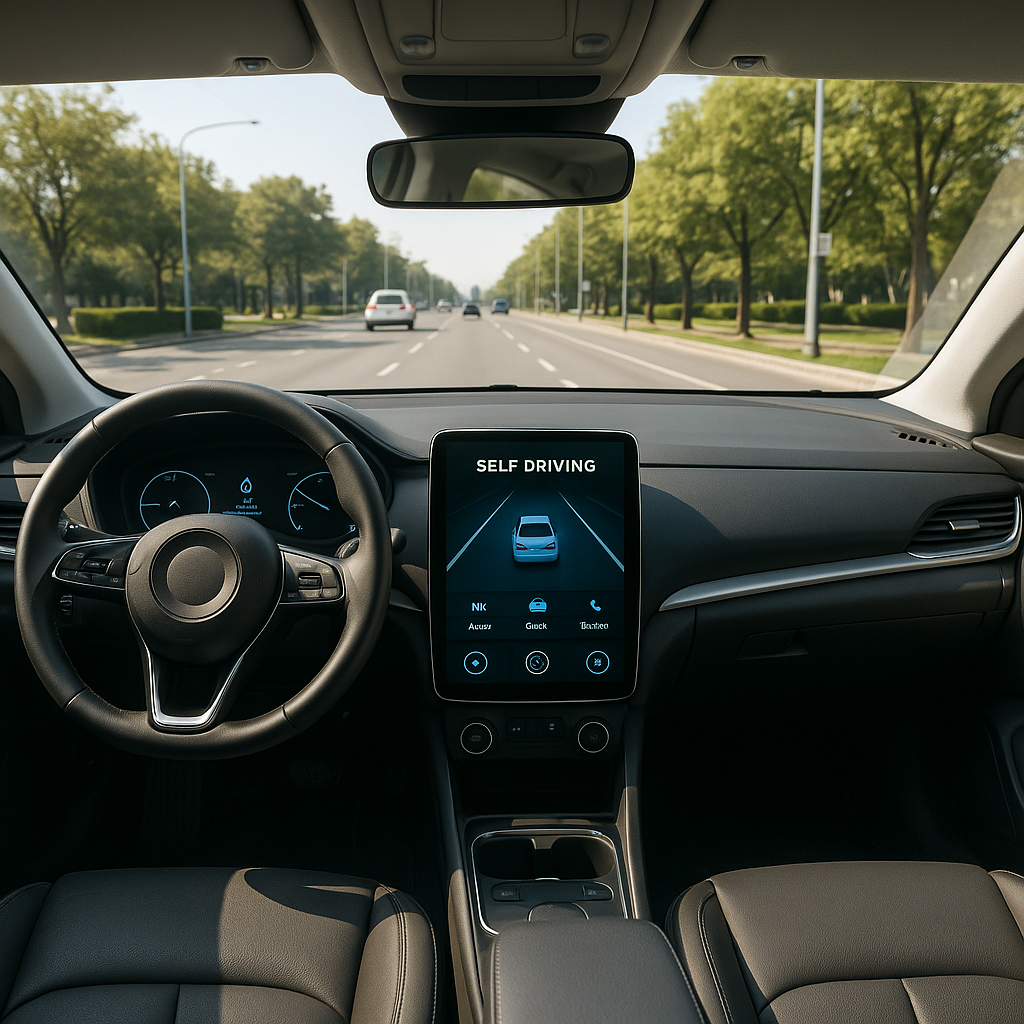
 That theme wasn’t just something I heard from the stage—it was something I experienced firsthand when I got into a Waymo self-driving car for the very first time.
Sitting in the “Driver’s Seat” Without Driving
I chose the front seat for my ride. Two other passengers slid into the back, while I sat in the passenger's seat. And that’s when the reality hit me: there was no steering wheel in my hands, no pedals at my feet, no human driver to glance over at for reassurance.
The first few blocks were nerve-wracking. Every instinct told me I should be in control—watching for pedestrians, anticipating traffic lights, ready to brake if needed. Instead, I had to sit still and trust the system.
But as the car handled every turn, stop, and acceleration with precision, my unease began to fade. That sense of “losing control” gave way to something surprising: relief. By not having to focus on the mechanics of driving, I suddenly had more mental space. I could observe the city around me, think about the conference sessions I’d just attended, and even jot down a few notes.
That’s when it clicked: the value wasn’t in what I lost—it was in what I gained. Time. Clarity. Focus.
The Perfect Metaphor for AI in Our Work
That Waymo ride wasn’t just a futuristic thrill—it was the perfect metaphor for what AI can do in our professional lives.
AI doesn’t replace our role. It takes on the repetitive, tactical, and time-intensive work—the things that keep us locked in the “driver’s seat” of daily tasks—so we can direct our energy toward strategy, creativity, and connection.
Just as the car drives itself while I stay alert in the front, AI manages the execution while we bring vision, judgment, and oversight.
What Inbound 2025 Reinforced
This message appeared repeatedly throughout Inbound 2025. From the main stage to the breakout sessions, the examples were everywhere:
-
AI-driven analytics tools turn massive datasets into clear insights within seconds, allowing marketers to shift from analysis to action.
-
Personalization engines uncover patterns in customer behavior, so we can spend our time crafting authentic, human stories.
-
Automation platforms handle repetitive workflows, freeing us to experiment, innovate, and focus on the big picture.
The underlying truth was consistent: AI doesn’t diminish the human role—it amplifies it.
Human + AI = True Collaboration
My Waymo experience mirrored what this collaboration looks like.
-
AI brought speed, precision, and focus to driving.
-
I brought oversight, judgment, and trust by being in the seat.
Neither one of us could have completed that ride alone—it required both. And that’s precisely how AI works best in business.
The Hardest Part: Letting Go
The hardest part of that ride wasn’t the technology. It was me—sitting in the front seat, resisting the urge to take back control.
And in many ways, that’s the same challenge organizations face with AI adoption. It’s not the tools themselves that hold us back—it’s the hesitation to let go of old ways of working. The fear of change. The fear of irrelevance.
But when we do let go—when we allow AI to take on what it does best—we gain back the very things we’re always short on: time, perspective, and the freedom to innovate.
Embracing AI for What Comes Next
AI isn’t a threat. It’s a co-pilot. It’s the partner that lets us focus on what makes us uniquely human: vision, creativity, emotional intelligence, and leadership.
That Waymo ride gave me more than just a glimpse of the future of transportation. It reminded me that the real power of AI isn’t about machines taking over—it’s about creating space for people to do more, think more, and be more.
And sometimes, the only way to experience that is to sit in the front seat, let go of control, and trust the process.
Footage from our Waymo ride - listening to our favorite jam.
FAQs
Q: What does “AI and human collaboration in marketing” mean?
A: It refers to a teamwork model where AI handles data-driven, repetitive tasks, like content generation, personalization, and campaign optimization, while human marketers provide oversight, creativity, strategy, and emotional intelligence. This synergy allows teams to scale operations without losing authenticity.
Q: How prevalent is AI adoption among marketers today?
A: It’s become nearly ubiquitous. Studies show 94% of organizations now use AI in preparing or executing marketing.
Q: What’s the biggest challenge in adopting AI as a marketing co‑pilot?
A: The most challenging hurdle is often human, not tech. It’s about learning to let go: relinquishing control of routine tasks and trusting AI to handle automation while we focus on higher-order functions. This cultural shift—from fear to trust—is where transformation happens.
At Page One Web Solutions, we’ve always championed inbound marketing: embracing content, connection, and conversion. Now, as AI redefines how businesses operate, we’re guiding our client partners through modern Revenue Operations (RevOps) strategies. By harnessing AI to automate repetitive tasks (think lead scoring, personalization, and reporting), we enable teams to reclaim bandwidth for strategic thinking. In this new era, AI and people co-pilot growth: the technology accelerates results, and your human expertise steers outcomes that truly impact the bottom line.
Insights that drive informed decisions
Get practical frameworks, proven playbooks, and growth stories from teams building smarter systems.
The Content King Is Dead, Long Live Context
I spent three days at UNBOUND 26 about a month ago, and if I had a dollar for every time someone said "context," I...

Introducing GrowthTech Partners
Twenty years ago, I left a job at an industrial directory company with a simple observation: Google was about to change...

The New Era of Search: What GEO & AEO Mean for Modern...
We are in the midst of a shift from classic, keyword-driven SEO to generative engine optimization (GEO) and answer...