


 Call Us

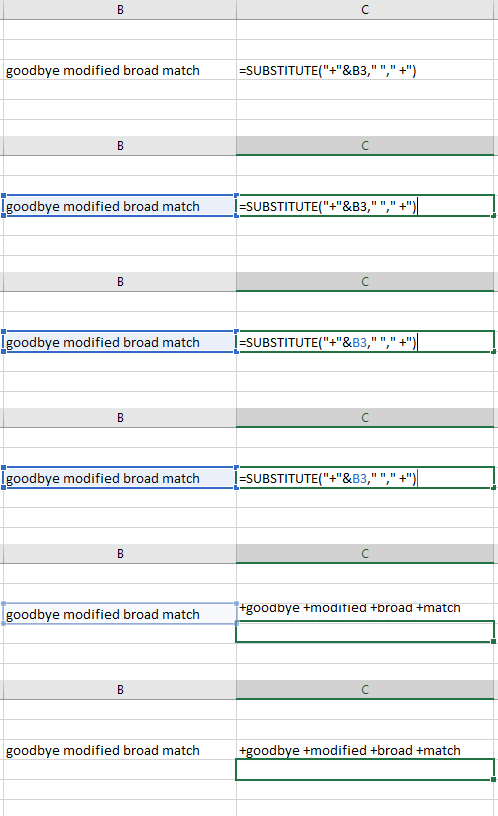
We’re reaching the end of Google’s keyword match type: modified broad match. This is a change that gives a Google Ads account a lot of pluses, while at the same time, removing a lot of pluses. Google must really dislike the plus, given the sunsetting of Google Plus. Excel’s substitute formula will no longer be needed, which is definitely a plus. Let's talk about how this modified broad match change will affect your accounts. This change, along with the transition to Google Analytics GA4, is going to impact your account unless you take action.
What Happens Now
Your account, as of 18 February 2021, will still work with modified broad match keywords. Google will begin to update its matches to search queries by making modified broad match keywords match as if they were phrase match. The rollout will be slow, with the full changeover expected to take place in July. Once the matching behavior is fully implemented, we will not be able to create new modified broad match keywords. If you’re wicked busy and aren’t able to make the transition from MBM to phrase match, Google will continue to use your modified broad match keywords as phrase match. The easiest way to make the switch is using the Google Ads Editor. Use the find and replace feature to replace the plus with nothing.
When Negatives Are Positives
While you might be using more broad match keywords for more open ended search queries, remember that negative keywords can help cut out the noise and lower your irrelevant clicks. There is no update to Google’s negative keyword function, so keep your lists and make sure they’re continually updated with irrelevant queries that you find. Are you noticing a drop in traffic with this update? Let us know!
Insights that drive informed decisions
Get practical frameworks, proven playbooks, and growth stories from teams building smarter systems.

The Content King Is Dead, Long Live Context
I spent three days at UNBOUND 26 about a month ago, and if I had a dollar for every time someone said "context," I...

Introducing GrowthTech Partners
Twenty years ago, I left a job at an industrial directory company with a simple observation: Google was about to change...

The New Era of Search: What GEO & AEO Mean for Modern...
We are in the midst of a shift from classic, keyword-driven SEO to generative engine optimization (GEO) and answer...