Summary
This blog explores the strengths and pitfalls of lead scoring in marketing automation, highlighting its efficiency benefits while warning against arbitrary rules and outdated models. It offers smarter, complementary alternatives—like ICP validation, sales interaction analysis, intent data, and trigger-based workflows—that provide a more accurate view of sales readiness.
Key Points
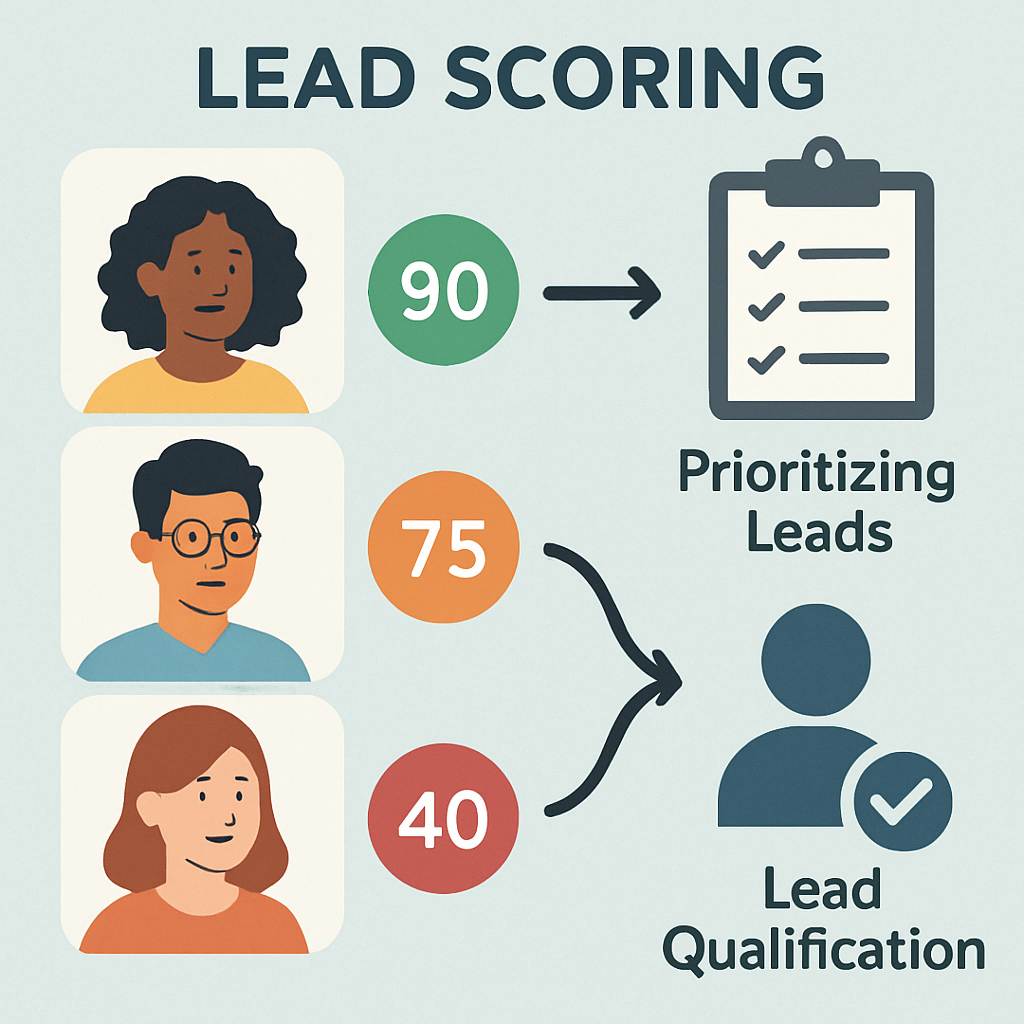
- Lead scoring helps prioritize leads, align sales and marketing, and automate qualification at scale.
- Common pitfalls: arbitrary scoring rules, oversimplified buyer behavior, and stale models.
- Best practices: apply negative scoring, include score decay, blend manual + predictive methods, and calibrate regularly.
- Alternatives: ICP + buying signals, sales interactions, intent data with context, trigger-based workflows, and ongoing human oversight.
- The goal isn’t perfect scoring, but an adaptive system that evolves with buyer behavior and sales outcomes.
When it comes to email marketing and marketing automation, lead scoring is often touted as the golden metric for distinguishing between hot prospects and passive observers. Yes, it can streamline workflows—but all too often, organizations fall into the trap of building overly arbitrary scoring rules that don't truly reflect who’s ready to buy.
Pros of Lead Scoring
Lead scoring offers tangible benefits:
- PRIORITIZES RESOURCES: IT HELPS MARKETING AND SALES TEAMS FOCUS ON THE LEADS THAT MOST RESEMBLE YOUR BEST CUSTOMERS, BOOSTING EFFICIENCY AND CONVERSION RATES.
- ALIGNS TEAMS AROUND AGREED THRESHOLDS: SALES AND MARKETING CAN AGREE ON WHAT CONSTITUTES A MARKETING QUALIFIED LEAD (MQL), DRIVING SMOOTHER HANDOFFS.
- AUTOMATES QUALIFICATION AT SCALE: AUTOMATIC SCORING ENABLES TEAMS TO FILTER HIGH- VS. LOW-INTENT PROSPECTS WITHOUT MANUAL REVIEW.
The Flip Side: When Lead Scoring Falls Short
But there are real downsides marketers need to watch out for:
- ARBITRARY RULES OFTEN MISFIRE: TOO MANY ORGANIZATIONS ASSIGN POINTS WITHOUT RIGOROUS VALIDATION—OFTEN PRODUCING INACCURATE OR MISLEADING LEAD QUALITY SIGNALS.
- SCORING CAN OVERSIMPLIFY BUYER BEHAVIOR: A HIGH SCORE DOESN’T GUARANTEE TRUE INTEREST. SOMEONE MAY REPETITIVELY CLICK ON BLOG CONTENT BUT STILL BE MONTHS FROM BUYING—OR NOT A FIT AT ALL.
- STALE OR BIASED MODELS: MANUAL SYSTEMS NEED CONSTANT TUNING. WITHOUT REGULAR AUDITS, SCORES BECOME OUTDATED AND BIASED.
Best Practices in Lead Scoring
If you’re using lead scoring (and many still should—but cautiously), keep these practices front and center:
- USE NEGATIVE SCORING: IDENTIFY BEHAVIORS OR TRAITS SUGGESTING LOW FIT—LIKE UNSUBSCRIBES OR OUT-OF-TERRITORY LOCATIONS—AND SUBTRACT POINTS ACCORDINGLY.
- INCLUDE DECAY MECHANICS: LEADS LOSE POINTS OVER TIME IF ENGAGEMENT DROPS, ENSURING LONG-DORMANT CONTACTS DON’T CLOG UP YOUR SALES PIPELINE.
- COMPLEMENT MANUAL SCORING WITH PREDICTIVE ANALYTICS: AI-DRIVEN MODELS ADAPT IN REAL TIME TO CHANGING BEHAVIORS—BUT DEMAND CLEAN, RICH DATA TO DELIVER RELIABLE RESULTS.
- BLEND SCORING MODELS: LAYER RULE-BASED, PREDICTIVE, AND INTENT-BASED SCORING TO CREATE A NUANCED, MULTI-DIMENSIONAL VIEW OF BUYER READINESS.
Alternatives (and Enhancements) That Offer More Insight
While lead scoring can be a starting point, there are richer—and sometimes more reliable—ways to learn who's sales-ready:
- Ideal Customer Profile (ICP) + Buying Signals
Begin by validating that a lead fits your Ideal Customer Profile—think company size, industry, geography, or revenue. Once that foundational check is in place, layer in meaningful behavioral signals such as replying to an email, attending a webinar, or booking a demo. This two-step approach—firmographic fit plus intent-driven action—tends to be far more predictive of true sales readiness than behavior alone. It ensures your sales team isn’t just getting “active” leads, but leads who are both a match and showing signs they’re in-market.
- Sales Interaction Indicators
Analyze what actually drives deals to close—or stall. Look at call transcripts, objection patterns, follow‑up behaviors. Over time, these human insights can be more predictive—and much harder to game—than automated scoring alone.
- Intent Data + Behavior Context
If feasible, incorporate intent signals—such as third-party data showing in-market behavior—or engagement signals like visiting pricing pages, downloading product comparisons, etc. Pair those with contextual scoring rather than generic weights.
- Trigger-Based Workflows
Rather than relying solely on scoring thresholds, create automation workflows around specific triggers: e.g., “Opened pricing and then replied in 24 hours” might be high-priority—even if their overall score isn’t sky-high. This approach targets real opportunity moments.
- Ongoing Calibration & Human Oversight
Set up regular reviews with sales to evaluate which leads flipped, which languished, and why. Update your rules, intents, or triggers accordingly—don’t let your system ossify.
Final Thoughts
Lead scoring can still play a role—but treat it as one of many tools in your marketing automation toolbox, not the end‑all indicator of readiness. When scoring gets overly rigid or uncalibrated, you’ll miss opportunities—and worse, waste resources chasing misguided “hot” leads.
Here’s a quick Lead Scoring Decision Guide:
|
Use lead scoring when…
|
Add alternatives when…
|
|
You have a defined ICP and enough data
|
You suspect high-scoring leads aren’t converting
|
|
You align sales and marketing around metrics
|
You want deeper human insights and behavioral context
|
|
You layer in decay and negative scoring
|
You want to pivot to more adaptive modeling
|
Ultimately, the goal isn’t to build perfect scoring—but a system that evolves with buyers’ behaviors and sales outcomes. That’s how you'll truly identify when it's time to pass a lead to sales—and when to keep nurturing strategically.
Lead Scoring FAQs
- What are the main benefits of lead scoring?
Lead scoring enables marketing and sales to prioritize high-quality leads, align on MQL definitions, and automate qualification at scale. This reduces wasted effort and speeds up the sales cycle.
- Why does lead scoring often fail?
Lead scoring models fail when they rely on arbitrary rules, oversimplify buyer behavior, or become outdated. Without continuous validation, the scores can mislead sales teams and waste resources.
- What is a smarter alternative to traditional lead scoring?
Smarter approaches include validating Ideal Customer Profiles (ICP) first, then layering in behavioral and intent signals, such as demo requests or webinar attendance, to ensure both fit and readiness.
- How can predictive analytics improve lead scoring?
Predictive analytics uses AI models to adapt scoring in real time, making it more responsive to changing buyer behaviors. However, it requires high-quality, well-maintained data to be effective.
- Should companies completely replace lead scoring?
Not necessarily. Lead scoring still has value, but it should be part of a broader system that incorporates trigger-based workflows, intent signals, and regular human oversight.
At Page One Web Solutions, we help marketing and sales teams move beyond lead scoring by implementing smarter automation, predictive analytics, and intent-driven workflows. Our solutions are designed to increase conversion efficiency and align go-to-market teams around real buying signals. Contact us today if you’re ready to upgrade your demand generation strategy.



 Call Us